Commercial buildings require specific safety measures to protect occupants and property during unexpected emergencies. If you are a property owner or facility manager asking, “What is a fire door drop test?” It is essentially a mandatory verification that your facility’s rolling steel safety barriers will function correctly during a fire.
Facility managers must schedule this vital evaluation annually to maintain strict building compliance and make sure every garage door or rolling steel barrier is verified for safety. This process involves a rigorous mechanical assessment designed to compartmentalize a building, trap fire at its origin, and provide critical evacuation time.
The Mechanics of a Rolling Fire Door
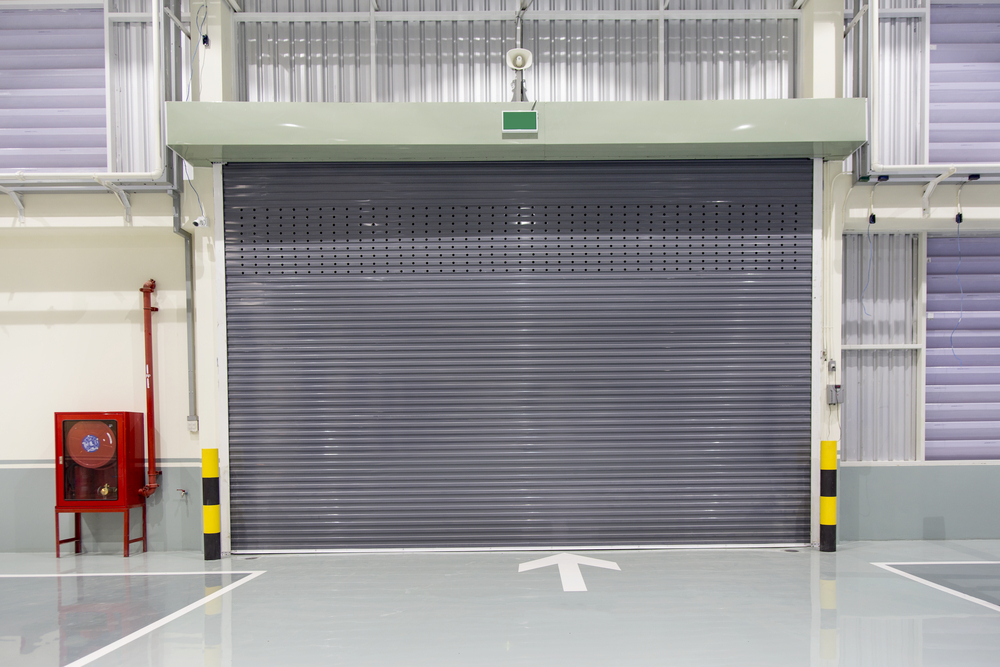
A successful drop test requires all physical components of the door assembly to work together under the force of gravity. Most commercial facilities use a rolling steel fire door to separate distinct building zones, such as a warehouse from an office space.
During an emergency, the system relies on fusible links to trigger automatic closure. When ambient temperatures rise past a specific threshold, typically 165°F, these heat-sensitive thermal links melt. This releases the tension on the sash chain, initiating the automatic closing sequence and allowing the door to descend under its own weight.
To achieve total dependability, NFPA 80 standards mandate a double-drop test:
- The First Drop: Verifies that the barrier closes completely, making continuous contact with the floor without binding or leaving gaps.
- The Second Drop: Confirms that the automatic features, governor speed controls, and spring tensions reset properly after the initial activation.
Regulatory Standards and Safety Requirements
Building codes mandate strict adherence to national fire safety protocols. The primary directive comes from the National Fire Protection Association under the NFPA 80 standard (Standard for Fire Doors and Other Opening Protectives). This standard dictates how often facilities must inspect and test their protective barriers, emphasizing that a fire door drop test is a strict legal requirement, not a suggestion.
The regulations apply to every commercial property utilizing automated fire barriers, regardless of the building’s age or size. According to these rules, the annual inspection must be executed by a trained and certified technician.
Failing to maintain compliance with NFPA 80 standards can result in immediate facility closure, severe financial penalties, and denied insurance claims following a fire event. Scheduling a certified fire door drop test in Chester County, PA keeps your facility fully compliant with local and national fire codes.
The Visual Inspection: Why Professional Expertise Matters
Before initiating any drop test, professionals must conduct a thorough visual assessment to identify obvious hazards. Standard maintenance personnel often lack the specialized tools and training required to safely reset high-tension springs. Partnering with a dedicated specialist like Stokes Equipment makes sure your systems are evaluated by factory-trained technicians backed by decades of industrial door expertise.
During the pre-test inspection, technicians check:
- Tracks and Guides: Inspecting for bent, warped, or misaligned tracks that create friction and slow the door’s descent.
- Component Integrity: Looking for damaged parts, such as frayed cables, worn slats, or missing hardware.
- Obstructions: Making sure that no materials block the opening or cover the guide slots.
- Fusible Links: Checking that links are clean and free of paint, dust, or grease, which can insulate the metal and prevent it from melting at the designated temperature.
If the hardware binds or feels unusually heavy during manual operation, the technician must correct these faults before starting the physical drop test to prevent structural damage.
How to Execute the Drop Test Procedure
Executing a drop test involves a precise, step-by-step procedure to make sure the results are valid for compliance.
Perform the Initial Drop
Disconnect the thermal link or activate the alarm connection to trigger the descent. The technician must time the closing speed to verify it falls within the mandated range of 6 to 24 inches per second.
Reset the Operating Mechanism
Re-engage the internal tension springs and replace the release devices. This is a highly technical step that requires specialized tools to manage the immense spring tension safely.
Execute the Second Drop
Repeat the dropping process to verify consistent mechanical performance and make sure that resetting the system did not introduce any alignment or operational issues.
Documentation and Compliance Technical Data
Thorough record-keeping is your primary shield against liability. After completing a successful evaluation, your technician will provide a detailed technical data sheet outlining the results.
Many professionals utilize standard DASMA (Door & Access Systems Manufacturers Association) technical guidelines to record findings. Keeping these technical data sheets on file for at least three years is a mandatory part of maintaining compliance. If a fire marshal or insurance investigator conducts an audit, this documentation serves as your formal proof of due diligence.
To keep your operations compliant across state lines, booking a professional fire door drop test guarantees your facility’s safety documentation meets all local tri-state jurisdictional regulations.
Common Failure Points and Maintenance Benefits
Understanding why fire doors fail can help facility managers prioritize their maintenance budgets effectively.
1. Sluggish Descent
- Cause: Lack of track lubrication; dust buildup in the governor.
- Safety Risk: Door falls slower than 6 inches/sec, allowing smoke to escape.
2. Uncontrolled Drop
- Cause: Faulty governor or broken tension springs.
- Safety Risk: Door crashes faster than 24 inches/sec, risking severe injury or structural damage.
3. Failure to Close Fully
- Cause: Broken springs, bent guides, or floor obstructions.
- Safety Risk: Leaves gaps that compromise the integrity of the entire fire barrier.
Routine planned maintenance from Stokes Equipment prevents these issues from developing. By catching minor wear and tear early, you extend the lifespan of your heavy steel doors, save thousands of dollars in premature replacement costs, and make sure your building’s emergency barrier functions exactly when it matters most.
Keep Your Facility Safe and Compliant
Do not wait for a fire marshal’s audit or an actual emergency to discover a mechanical failure in your fire protection systems. Partner with the industry experts at Stokes Equipment to secure your facility, protect your workforce, and keep your business fully compliant.
Contact Stokes Equipment today to request your professional fire door drop test today or to schedule your annual safety evaluation.