

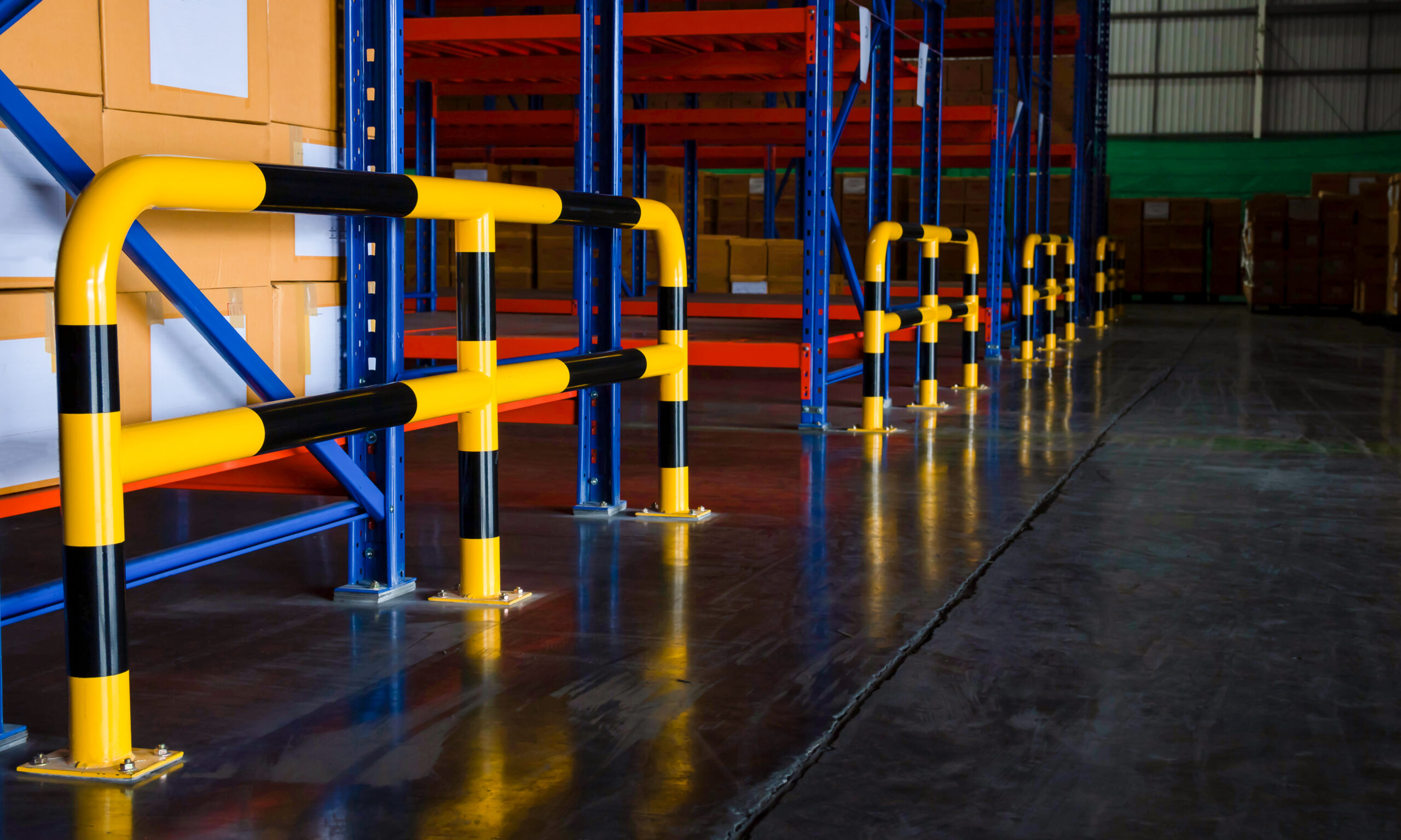
Comparing Polymer and Steel Safety Barriers: Which is Right for Your Facility?
In warehouses, manufacturing facilities, and logistics hubs, safety barriers are essential for safeguarding personnel, machinery, and infrastructure. Steel and polymer are two materials that come up the most in these conversations. Although both offer necessary protection, it’s crucial to comprehend the variations in performance, design, and maintenance before choosing one. Let’s examine the differences between these materials, their practical uses, and how to select the one that will work best for your establishment.
Although both steel and polymer offer necessary protection, it’s crucial to understand the variations in performance, design, and maintenance before choosing one. Depending on the particular environmental challenges, such as exposure to impact, moisture, or temperature fluctuations, each material has advantages and disadvantages. Selecting between steel and polymer barriers becomes a strategic choice as companies seek to maximize safety and minimize long-term expenses. Let’s examine the differences between these materials, their practical uses, and how to select the one that will work best for your establishment.
Material Basics: What Are Steel and Polymer Barriers Made Of?
Polymer safety barriers are made from impact-modified, semi-rigid polypropylene. Because of its flexibility and resistance to wear, this engineered thermoplastic is perfect for industrial settings. The lightweight design facilitates installation while offering reliable impact protection. Typically round and tubular in shape, polymer barriers reduce the risk of equipment damage or worker injury by absorbing force and flexing under pressure. These characteristics make polymer an excellent material for dynamic environments where material handling equipment, such as pallet jacks and forklifts, is used frequently day-to-day.
Steel barriers, on the other hand, are rigid structures that have been painted a vivid yellow powder finish for optimal visibility. Made of heavy-gauge steel, these robust barriers are capable of stopping large machinery. On the other hand, steel is less effective at absorbing impact. Instead, it redirects collision energy into the earth or adjacent buildings, potentially increasing the likelihood of secondary damage. Although this rigidity is beneficial for certain static protection applications, it may lead to higher maintenance requirements in areas with high vehicle traffic.
The Reaction of Every Material to Impact
Collisions occur in a busy facility. By being aware of how each barrier responds to pressure, costly repairs and injuries can be avoided.
Steel Barriers: Although steel is impervious to penetration, it will dent, scratch, or distort when struck. It is more likely that equipment will sustain damage if it collides with steel. Furthermore, bent or broken steel can become dangerous, particularly if its sharp edges are visible.
Polymer Barriers: The polymer regains its shape after absorbing impact energy. These barriers minimize damage to forklifts or pallet jacks and lower the possibility of injury to surrounding workers by bending under stress rather than shattering. Because of its adaptability, polymer is a wise choice for areas with heavy traffic.
For applications in busy dock areas, it’s important to have the right vehicle restraint systems. We’re happy to answer any questions your team may have regarding vehicle restraint systems in Philadelphia, so you can feel confident in the safety of your operations.
Maintenance and Durability Over Time
Safety barriers are subjected to environmental factors such as moisture, dust, debris, and the normal wear and tear of daily operations over time. The ability of a barrier to continue operating without regular maintenance, whether it is placed in a loading dock, warehouse, or parking structure, can have a direct impact on costs and operational efficiency.
Steel Barriers: Although steel barriers are sturdy and widely recognized, they need regular upkeep to remain operational and easily identifiable. In order to preserve both appearance and corrosion resistance, barriers may require frequent repainting because steel is prone to rust, particularly when protective coatings are worn or scratched. Collisions can result in dents and deformation in crowded industrial settings, impairing the barrier’s capacity to withstand impact. Steel rarely regains its original shape once bent, and gradual deterioration often calls for total replacement. Both labor and replacement expenses can pile up as a result of these continuous maintenance requirements.
Polymer Barriers: A different strategy is provided through polymer barriers. These barriers, which are made of impact-modified polypropylene, are colored all the way through to prevent scratches from reducing visibility. Repainting is not needed because of this built-in color, and their UV-stabilized formulation doesn’t fade in the sun. Even in environments with high humidity or moisture, polymer does not rust or corrode like steel does. Because of its flexibility, the material can withstand shocks and regain its shape without permanently deforming. Because of this, polymer barriers typically last longer and require a lot less maintenance, which saves time and money over the installation’s lifespan.
Long-Term Value and Cost Considerations
Initial price points could be misleading if long-term value isn’t taken into account. The true cost of a safety barrier system includes ongoing maintenance, the frequency of repairs, and the material’s lifespan under typical use, in addition to the initial investment.
Steel Barriers: Since steel barriers are usually less expensive to buy, they appear to be cost-effective at first glance. However, steel prices can fluctuate in response to global market conditions, which can sometimes lead to replacement costs that are higher than anticipated. Steel barriers also require more frequent repairs or even replacements due to their increased susceptibility to impact damage. Steel may ultimately prove to be a more costly investment than expected due to these recurring expenses, labor, and downtime.
Polymer Barriers: In the long term, polymer barriers are often worth the higher initial cost. They can endure shocks without sustaining irreparable damage due to their durable, flexible design, which significantly reduces the need for repairs. Replacement parts are easily obtained, which can be low maintenance, and less susceptible to fluctuations in market prices. Polymer’s cost and performance stability make it a smart choice for companies looking to reduce their total cost of ownership.
In high-volume warehouse environments where downtime is costly and safety is paramount, investing in a barrier system that provides dependable performance with little maintenance can yield substantial long-term savings.
Different Types of Polymer Barriers for Specific Needs
To meet the needs of various facilities, polymer safety barriers are available in a variety of sizes and models. Rite-Hite’s GuardRite® line offers the following choices:
- LD (Light Duty): Perfect for keeping light vehicle routes and pedestrian zones apart. It can sustain hits from cars weighing up to 15,000 pounds at low speeds thanks to its two 4-inch rails.
- HD (Heavy Duty): Combines reinforced 4-inch, and 6-inch rails. made to handle heavy forklift loads of up to 30,000 lbs.
- HD Plus: Prevents lower-to-the-floor collisions and pallet strikes by adding a ground-level rail to the HD design.
- HDXL: Extended height protection for taller equipment and stacked goods. Stands 10 feet tall with seven rails.
- HDXL Plus: Combines ground-level protection with HDXL’s tall design for all-encompassing coverage.
- HDSR (Short Rail): Centered on securing equipment and infrastructure while maintaining a low profile.
It is simpler to match the barrier to the workflow and risk zones of your facility because each model tackles distinct issues.
Steel Barrier Options and Their Strengths
Steel is still the material of choice for some operations. The Guard of Rite-Hite Steel barriers offer robust defense with:
- Single-Rail Systems: 23 inches tall, designed for light-duty separation.
- Double-Rail Systems: 44 inches tall, delivering stronger protection against collisions up to 30,000 lbs at higher speeds.
Steel is a good material for buildings that aren’t impacted as often or for dividing specific work areas where flexibility isn’t as important. Find out more about steel guardrail systems in Lehigh Valley or surrounding areas, and other fall protection equipment here if you’re constructing a warehouse.
Key Considerations for Choosing Between Steel and Polymer
When comparing materials, ask yourself:
- What is the frequency of impacts in the area?
- Do you often use carts or forklifts?
- Is visibility the main issue?
- Will barriers be subjected to chemicals or moisture?
- Are long-term financial savings a top concern?
There are unique challenges for every facility. Polymer performs best in settings with lots of traffic, lots of collisions, or exposure to the elements. Steel may be appropriate for lighter applications or situations with limited funds and few impacts.
Safety Beyond the Barrier Itself
It takes more than just setting up a rail to install a safety barrier. It is a component of an all-encompassing strategy for facility and worker safety. Consider how barrier materials complement your other safety equipment, traffic flow, and facility conditions when designing a new warehouse layout or renovating an existing one. Making the best choice can be aided by speaking with a loading dock and safety solutions specialist with experience.
Ready to Protect Your Facility?
You don’t have to make this difficult decision alone when deciding between polymer and steel safety barriers. Stokes Equipment can assist you in determining the optimal solution for the unique layout, traffic patterns, and safety objectives of your operation. Our qualified staff will help you with weighing immediate and long-term expenses, comparing product models, and understanding installation requirements. Contact us today to schedule a consultation and take the first step toward a safer, more efficient facility.


